How to Source Herbs from Iran: A Complete B2B Buyer’s Guide
Iran has a remarkably diverse botanical landscape shaped by its varied climates, elevations, and growing regions. Scientific literature identifies approximately 8,200 vascular plant species in Iran, around 2,300 of which are recognized as medicinal or aromatic plants.
For international buyers, however, finding a product in Iran is only the beginning. Successful sourcing requires identifying the right growing region and supplier, defining clear specifications, evaluating representative samples, verifying quality, agreeing on packaging, and coordinating the required commercial and export documentation.
This guide explains how B2B buyers can approach Iranian herb sourcing systematically — from the initial product requirement to supplier evaluation and pre-shipment quality control.
Why Source Medicinal and Aromatic Herbs from Iran?
Before diving into the sourcing process, it’s important to understand why Iran has become a preferred origin for medicinal and aromatic herbs:
Diverse Growing Regions
Iran’s geography includes mountainous, temperate, arid, and semi-arid environments. These different growing conditions support a wide variety of medicinal and aromatic plants across the country.
Origin matters because the characteristics of an agricultural product can vary according to growing region, harvest conditions, post-harvest handling, and processing method.
For B2B buyers, identifying the appropriate origin should therefore be part of the sourcing process rather than relying solely on a product’s commercial name.
Broad Product Availability
Iranian suppliers offer a variety of dried herbs, flowers, seeds, gums, and other natural ingredients for applications such as:
- Herbal tea and infusion production
- Food and beverage manufacturing
- Botanical and natural ingredient distribution
- Cosmetic formulations
- Pharmaceutical and nutraceutical applications
- Flavoring and aromatic applications
Availability, commercial volumes, processing capabilities, and export readiness vary considerably between products and suppliers.
Access to Growing and Processing Regions
For international buyers, sourcing closer to production regions can provide greater visibility into product origin and available grades.
At the same time, purchasing directly from a grower is not always the most practical solution. Depending on the buyer’s requirements, products may require cleaning, sorting, testing, processing, or export-grade packaging before shipment.
A structured sourcing process should therefore evaluate both the agricultural source and the capabilities of processors and exporters involved in the supply chain.
Wide Product Range
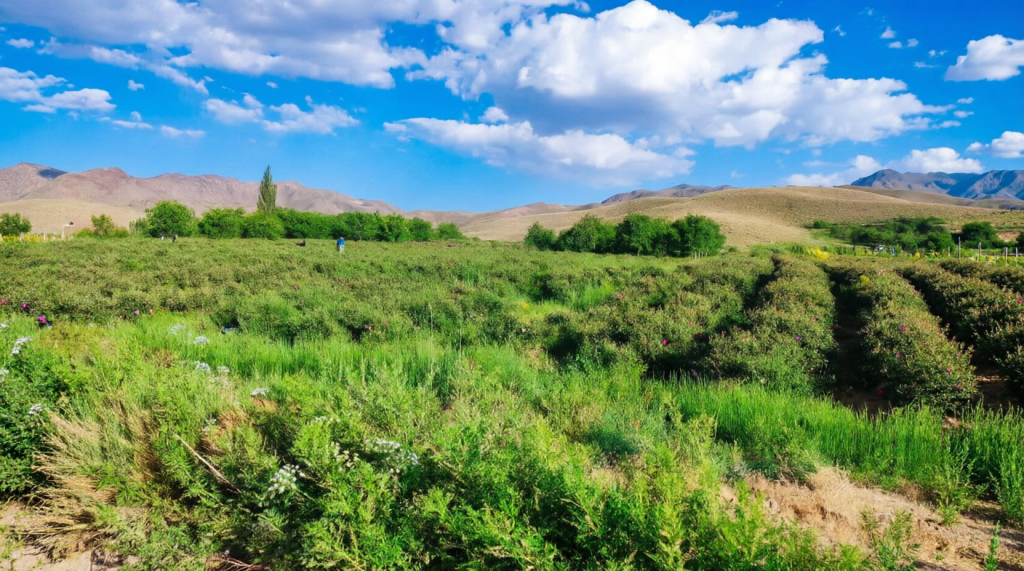
These advantages make it clear why more international buyers are choosing to source herbs from Iran for their businesses. The wide product range available when you source herbs from Iran includes over 200 species for diverse applications.
Iranian Herbs and Natural Ingredients for B2B Buyers
While Iran produces hundreds of medicinal plants, certain herbs dominate export markets due to consistent quality and international demand. Kerman province, in particular, is renowned for producing some of the finest quality herbs with distinctive characteristics that are highly valued in global markets.
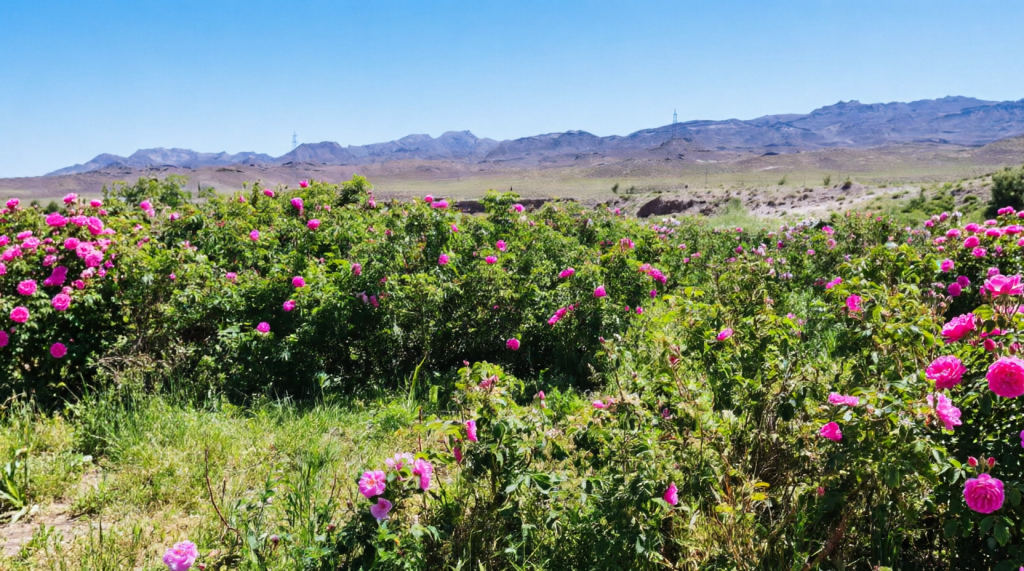
1. Damask Rose Buds (Rosa damascena) – Lalehzar, Kerman
Primary Region: Lalehzar, Kerman province (also Kashan and Fars)
Harvest Season: May-June
Key Characteristics: The Lalehzar region of Kerman is famous for producing exceptional Damask rose buds with deep pink to rose color, distinctive floral aroma, and superior oil content. The high-altitude climate and traditional cultivation methods create buds with excellent visual integrity and intense fragrance.
Applications: Herbal teas, cosmetics, aromatic waters (golab), food flavoring, pharmaceutical
Why Lalehzar Rose Buds? Known as the “Tulip Field” region, Lalehzar produces rose buds that are considered among the finest in Iran, with exceptional quality that commands premium prices in international markets.
When you source herbs from Iran, Damask rose from Kerman’s Lalehzar region is consistently one of the most sought-after products.
Learn more about Iranian Damask Rose →
2. Mallow Flowers (Malva sylvestris) – Kerman’s Panirak
Primary Region: Kerman province
Harvest Season: Spring-Summer
Key Characteristics: Kerman mallow (locally known as “Panirak”) is particularly renowned for its large, vibrant purple-blue flowers with excellent color retention, clean appearance, and proper moisture content. The traditional harvesting practices in Kerman ensure superior quality.
Applications: Herbal teas, throat remedies, cosmetic products, traditional medicine, respiratory health
Why Kerman Mallow? Kerman’s Panirak flowers are known for their exceptional size, color intensity, and cleanliness, making them a preferred choice for international buyers seeking premium mallow.
3. Safflower (Carthamus tinctorius) – Kerman’s Red Gold
Primary Region: Kerman province (also Khorasan and Isfahan)
Harvest Season: Summer (June-August)
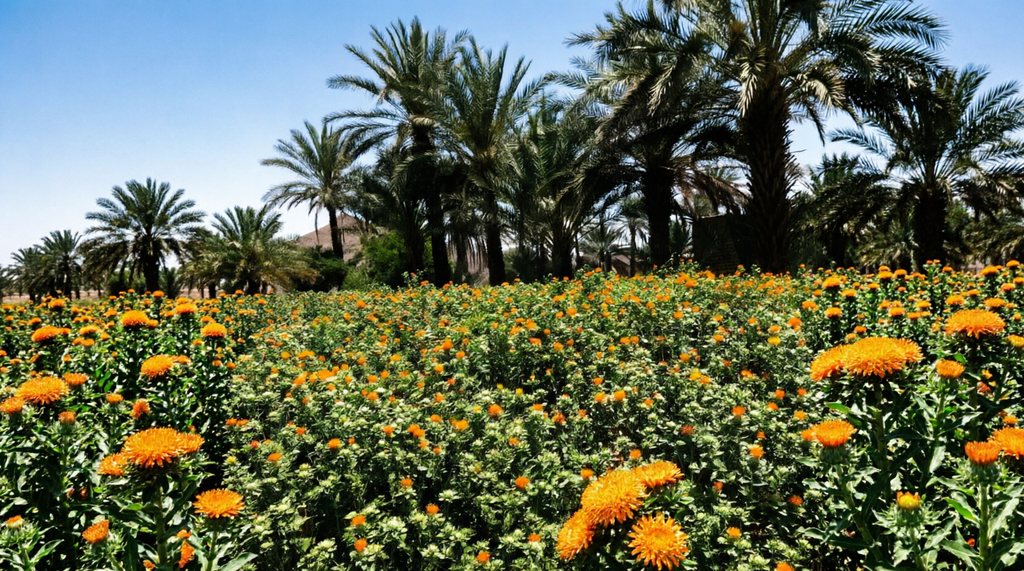
Key Characteristics: Kerman safflower is famous for its distinctive deep red-orange color (known locally as “Sorkh Rang” – meaning “red color”). The arid climate of Kerman produces safflower petals with intense pigmentation, natural drying process, and minimal stem content.
Buyers who source herbs from Iran particularly value Kerman safflower for its distinctive deep red-orange color known locally as “Sorkh Rang.”
Applications: Natural food coloring, herbal teas, traditional medicine, textile dyeing, cosmetic products
Why Kerman Safflower? The unique climate conditions in Kerman produce safflower with exceptional color intensity, making it highly sought after for natural coloring applications worldwide.
4. Hibiscus (Hibiscus sabdariffa) – Kerman’s Chai Torsh
Primary Region: Kerman province (specialized cultivation)
Harvest Season: Fall-Winter
Key Characteristics: Kerman is one of Iran’s primary regions for hibiscus cultivation, producing what is locally known as “Chai Torsh” (sour tea). The calyces are characterized by deep red color, tart flavor profile, and high anthocyanin content.
Applications: Herbal teas, beverages, natural coloring, food products, health supplements
Why Kerman Hibiscus? Kerman’s specialized cultivation produces hibiscus with consistent quality and distinctive characteristics preferred by international buyers.
5. Tarragon (Artemisia dracunculus) – Kerman’s Export Star
Primary Region: Kerman province (major export hub)
Harvest Season: Summer
Key Characteristics: Kerman tarragon has established international export reputation for its distinctive anise-like aroma, vibrant green color, and consistent quality. The region’s climate produces tarragon with optimal essential oil content.
Applications: Culinary herb, flavoring agent, traditional medicine, food industry
Why Kerman Tarragon? Kerman’s tarragon has gained recognition in international markets for its superior aroma and quality, making it a preferred choice for food manufacturers and distributors.
6. Rosemary (Salvia rosmarinus) – Iranian Varieties
Primary Regions: Various regions across Iran
Harvest Season: Year-round (peak in Spring-Summer)
Key Characteristics: Iranian rosemary is valued for its strong aromatic profile, needle-like leaves with deep green color, and high essential oil content. Different growing regions produce variations in aroma intensity.
Applications: Culinary herb, essential oil extraction, cosmetic products, aromatherapy, food preservation. International buyers looking to source herbs from Iran often request rosemary for its high essential oil content.
7. Pennyroyal (Mentha pulegium) – Iranian Puneh
Primary Regions: Various regions across Iran
Harvest Season: Summer
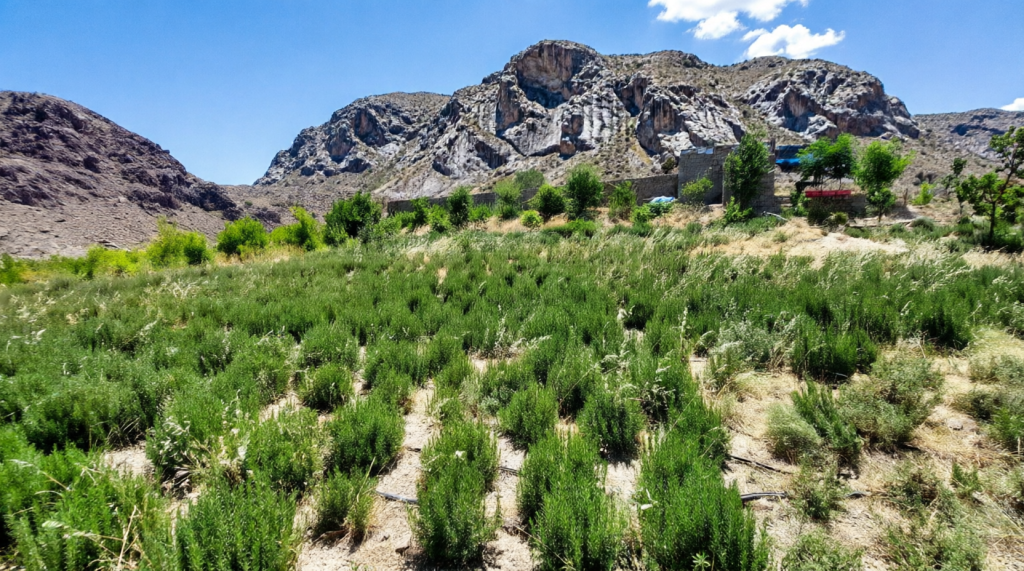
Key Characteristics: Iranian pennyroyal (locally known as “Puneh”) is characterized by its strong minty aroma, small leaves, and traditional medicinal properties. Wild and cultivated varieties are available.
Applications: Herbal teas, traditional medicine, digestive health, respiratory remedies, flavoring
8. Wild Thyme (Thymus spp.) – Avishan Kuhi for Essential Oils
Primary Regions: Mountainous regions of Iran
Harvest Season: Summer (during flowering)
Key Characteristics: Iranian wild thyme (Avishan Kuhi – mountain thyme) is particularly valued for essential oil and extract production. The wild-harvested variety from mountainous regions produces an exceptionally strong, pleasant aroma with high thymol content, making it superior for industrial extraction.
Applications: Essential oil extraction, herbal extracts, pharmaceutical industry, aromatherapy, natural preservatives
Why Iranian Wild Thyme? The mountain-grown wild thyme produces essential oils with exceptional quality and aroma profile, highly sought after by essential oil manufacturers and pharmaceutical companies.
Looking for herbs from specific Iranian regions or need custom specifications? Contact RABO Herbal to discuss your sourcing requirements.
Step-by-Step Process: How to Source Herbs from Iran
Successfully sourcing herbs from Iran requires a structured approach. Follow this proven process to source herbs from Iran successfully and avoid common pitfalls. Here’s the complete process:
Step 1: Define Your Requirements
Before contacting suppliers, clearly define:
- Product: Specific herb(s) needed
- Grade/Quality: Color, aroma, cleanliness standards
- Quantity: Initial order volume and projected annual needs
- Product Form: Whole, cut, crushed, powdered
- Packaging: Bulk bags, retail packaging, specific weight requirements
- Destination Market: Country and any regulatory requirements
- Documentation: Certificates of analysis, origin certificates, testing requirements
Clearly defining these requirements before you source herbs from Iran will save time and ensure you get the exact quality you need.
Step 2: Find a Reliable Sourcing Partner
This is where working with someone who understands how to source herbs from Iran becomes invaluable. You have three main options:
Option A: Work Directly with Growers
Pros: Direct communication, potentially lower prices
Cons: Language barriers, limited product range, complex logistics
Option B: Work with Export Companies
Pros: Full export services, documentation support
Cons: Less flexibility, higher prices, may not understand technical requirements
Option C: Work with a Sourcing Agent (Recommended)
A sourcing agent like RABO Herbal combines local market knowledge with buyer-focused service. We:
- Identify suitable growing regions and suppliers based on your specifications
- Evaluate product quality against your requirements
- Coordinate sampling before order confirmation
- Arrange documentation and export logistics through trusted partners
- Provide transparent communication throughout the process
Step 3: Request and Evaluate Samples
Never place a bulk order without evaluating samples first. A professional sourcing process includes:
- Sample Request: Specify quantity needed (typically 100-500g)
- Sample Evaluation: Assess color, aroma, cleanliness, moisture
- Third-Party Testing: If required, submit samples to independent laboratories
- Approval: Confirm the sample meets your specifications before proceeding
Requesting samples is a critical step when you source herbs from Iran to ensure quality meets your specifications.
Learn more about our quality evaluation process →
Step 4: Confirm Specifications and Pricing
Once the sample is approved:
- Finalize product specifications (grade, moisture, packaging)
- Confirm pricing (typically FOB or CIF basis)
- Agree on delivery timeline
- Review available documentation
- Confirm payment terms
Confirming detailed specifications before finalizing your order helps you source herbs from Iran with confidence.
Step 5: Documentation and Export Coordination
Iranian herb exports typically require:
- Commercial Invoice
- Packing List
- Certificate of Origin
- Phytosanitary Certificate (for some markets)
- Analysis Reports (if available from supplier)
- Bill of Lading / Air Waybill
Your sourcing partner should coordinate these documents through their export partners. Proper documentation is crucial when you source herbs from Iran for international shipping and customs clearance.
Step 6: Quality Control Before Shipment
Before the product leaves Iran:
- Request pre-shipment photos
- Confirm packaging meets specifications
- Verify documentation accuracy
- Arrange third-party inspection if required
Quality Standards: What to Evaluate
Quality evaluation is crucial when you source herbs from Iran. Focus on these key parameters:
1. Color and Appearance
Color indicates proper harvesting and drying. Damask rose should show natural pink to deep rose tones; safflower should display vibrant orange-red. Avoid products with faded or inconsistent color.
2. Aroma
Each herb has a characteristic aroma that should be distinct and natural. Weak or off-odors may indicate old stock, improper drying, or contamination.
3. Cleanliness
Products should be free from:
- Foreign matter (stones, dirt, other plant material)
- Excessive stem or non-flower parts
- Visible contamination
4. Moisture Content
Proper moisture levels (typically 8-12% for dried herbs) prevent mold growth and preserve quality during shipping and storage. These quality standards are essential considerations whenever you source herbs from Iran for commercial purposes.
5. Product Integrity
Whole flowers should maintain their shape; cut products should have uniform size. Excessive powder or broken pieces may indicate rough handling.
6. Batch Consistency
For repeat orders, request samples from the new batch to ensure consistency with previous shipments.
Understand our quality control approach →
Common Challenges and How to Overcome Them
Challenge 1: Finding Reliable Suppliers
Problem: Not all suppliers maintain consistent quality or understand international requirements.
Solution: Work with a sourcing agent who has established relationships with verified growers and understands quality evaluation.
Finding reliable suppliers is often the biggest challenge when buyers source herbs from Iran for the first time.
Challenge 2: Quality Consistency
Problem: Seasonal variations and different growing regions can affect product characteristics.
Solution: Specify exact requirements, request samples from each batch, and work with suppliers who understand your quality standards.
Maintaining quality consistency across batches is important when you source herbs from Iran for repeat orders.
Challenge 3: Documentation Requirements
Problem: Different markets have different documentation needs (EU, USA, Asia, etc.).
Solution: Clearly communicate your destination market requirements upfront. A professional sourcing partner will coordinate appropriate documentation.
Challenge 4: Seasonal Availability
Problem: Herbs are harvested at specific times of year; off-season sourcing may mean older stock.
Solution: Plan ahead and understand harvest seasons. For year-round supply, coordinate with your sourcing partner to secure fresh stock during harvest season.
Challenge 5: Communication Barriers
Problem: Language differences and time zones can complicate communication.
Solution: Work with an English-speaking sourcing agent who understands both local practices and international buyer expectations.
Working with an English-speaking agent makes it easier to source herbs from Iran without language barriers.
Why Work with a Sourcing Agent?
While it’s possible to source herbs from Iran directly, working with an experienced sourcing agent offers significant advantages. While you can source directly from suppliers, working with a professional sourcing agent offers significant advantages:
Local Market Knowledge
We understand which growing regions produce the best quality for specific applications, seasonal availability patterns, and fair market pricing.
Quality Control Expertise
We evaluate products against your specifications, not just general standards. This buyer-focused approach ensures the product matches your market needs.
Time and Cost Efficiency
Rather than spending months identifying and vetting suppliers, you leverage our existing network and expertise. This reduces both time-to-market and the risk of quality issues.
Risk Reduction
We coordinate sampling, verify documentation, and maintain communication throughout the process — reducing the risk of misunderstandings, quality issues, or shipping problems.
Transparent Process
Unlike some suppliers who may mix origins or grades, we provide clear information about product origin, characteristics, and available documentation before you commit.
These benefits make it clear why most successful importers choose to work with local experts when they source herbs from Iran.
Getting Started: Your Next Steps
Ready to source high-quality Iranian medicinal herbs? Here’s how to begin:
- Identify Your Needs: Determine which herbs, quantities, and quality specifications you require.
- Share Your Requirements: Contact us with details about your product needs, destination market, and any specific quality or documentation requirements.
- Review Supply Options: We’ll identify suitable sourcing options and provide detailed product information.
- Evaluate Samples: When appropriate, we’ll arrange samples for your evaluation.
- Confirm and Coordinate: Once approved, we coordinate the complete supply process from packaging to documentation.
Contact RABO Herbal today to discuss how we can help you source herbs from Iran with confidence.
Have questions about sourcing from Iran?
Request a Quote or Explore Our Products
Additional Resources
- FAO – Medicinal Plants Resources
- Iranian Medicinal Herbs Product Catalog
- Our Sourcing Process
- Quality Control Standards
About the Author
RABO Herbal is an Iranian medicinal herbs sourcing agency connecting international buyers with selected growers and suppliers. With deep local market knowledge and a buyer-focused approach, we help importers, manufacturers, and distributors source high-quality Iranian herbs with transparency and reliability.
Last Updated: January 2026